Highlights
- A personal injury case is a civil claim seeking compensation when someone else’s negligence or intentional conduct causes harm.
- Common personal injury cases include car accidents, slip and falls, medical malpractice, and defective products.
- Proving negligence requires showing duty, breach, causation, and actual damages.
- Most personal injury cases settle before trial, though the threat of trial shapes negotiations.
- Compensation can cover medical bills, lost wages, property damage, and pain and suffering.
- A personal injury attorney typically works on contingency, meaning payment only comes from a successful outcome.
What Exactly Is a Personal Injury Case?
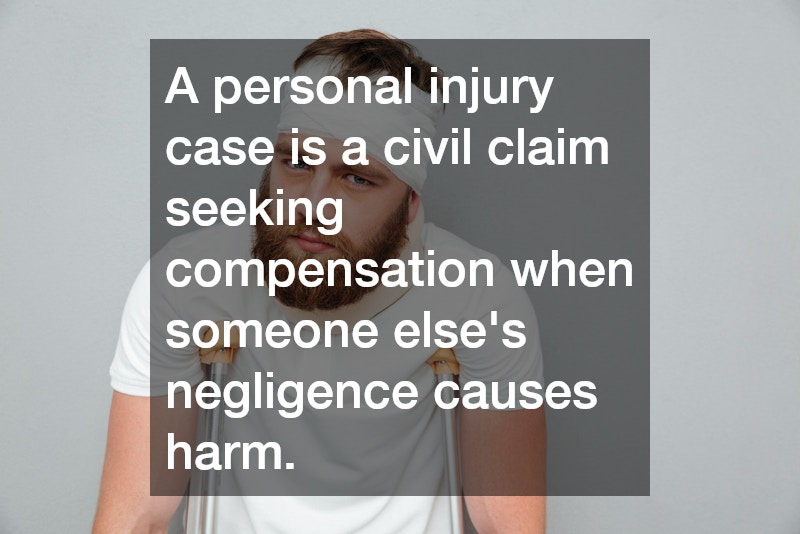
A personal injury case is a civil legal claim filed when one person’s negligent or intentional actions cause physical, emotional, or financial harm to another. Unlike criminal cases, which are prosecuted by the government to punish wrongdoing, personal injury cases are brought by the injured party, known as the plaintiff, seeking compensation, or “damages,” from the person or entity responsible, known as the defendant.
These cases fall under civil law rather than criminal law, meaning the goal is to make the injured person financially whole rather than to punish the wrongdoer through fines or jail time. A personal injury attorney typically evaluates whether a case has the legal elements needed to succeed before deciding whether to take it on, since not every accident or injury automatically translates into a viable claim.
What Are the Most Common Types of Personal Injury Cases?
Personal injury law covers a wide range of situations, though certain categories come up far more often than others:
- Car accidents — collisions caused by another driver’s negligence, distraction, or recklessness
- Slip and fall cases — injuries caused by hazardous conditions on someone else’s property
- Medical malpractice — harm caused by a healthcare provider’s failure to meet the accepted standard of care
- Product liability — injuries caused by defective or unreasonably dangerous consumer products
- Workplace accidents — injuries occurring on the job, which may involve both workers’ compensation and third-party claims
- Dog bites and animal attacks — injuries caused by an owner’s failure to control or contain their animal
According to Nolo’s personal injury resource library, these categories span everything from cruise ship illness claims to amusement park injuries, reflecting just how broadly personal injury law can apply whenever someone’s carelessness causes harm to another person.
How Do You Actually Prove a Personal Injury Claim?
Winning a personal injury case requires proving four specific legal elements, and missing any one of them can sink an otherwise sympathetic claim. First, the plaintiff must show the defendant owed a legal duty of care, such as a driver’s duty to follow traffic laws or a property owner’s duty to maintain safe premises. Second, the plaintiff must prove the defendant breached that duty through careless or reckless behavior. Third, there must be a direct causal link between that breach and the plaintiff’s injury, meaning the harm wouldn’t have happened without the defendant’s actions. Finally, the plaintiff must demonstrate actual damages, whether medical expenses, lost income, or another measurable harm. A personal injury attorney’s job largely centers on gathering evidence, such as medical records, accident reports, and witness statements, to support each of these four elements convincingly.
What Should You Know About the Claims Process?
Filing a personal injury claim generally follows a predictable sequence, though the details vary by case and jurisdiction. Before any lawsuit is filed, most attorneys attempt to negotiate directly with the at-fault party’s insurance company, since a fair settlement without litigation saves both time and legal costs for everyone involved. If negotiations stall, the next step is filing a formal complaint in civil court, which officially starts the lawsuit. According to the U.S. Courts’ overview of the civil case process, a civil action begins when a plaintiff files a complaint describing the injury, explaining how the defendant caused the harm, and asking the court for relief, after which both sides typically exchange evidence during a phase called discovery. Most cases still settle before reaching trial, but having a credible willingness to go to trial often strengthens an attorney’s negotiating position with the insurance company.
What Types of Compensation Are Available?
Personal injury damages typically fall into a few broad categories, each covering a different kind of loss:
- Medical expenses — past and future costs of treatment related to the injury
- Lost wages — income lost during recovery, plus reduced future earning capacity if applicable
- Property damage — repair or replacement costs for damaged vehicles or belongings
- Pain and suffering — compensation for physical pain and emotional distress caused by the injury
- Loss of enjoyment of life — compensation when an injury limits a person’s ability to enjoy previous activities
- Punitive damages — additional damages awarded in cases involving especially reckless or intentional conduct, though these are less common
Calculating a fair settlement amount requires weighing all of these factors together, which is one reason many injured parties choose to work with an attorney rather than negotiating directly with an insurance adjuster alone.
When Should You Contact a Personal Injury Attorney?
Timing matters significantly in personal injury cases, both for practical and legal reasons. Every state imposes a statute of limitations, a strict deadline for filing a lawsuit, and missing it typically means losing the right to pursue compensation entirely regardless of how strong the case might have been. Beyond legal deadlines, evidence like witness memories, physical evidence at an accident scene, and even a defendant’s insurance coverage details can become harder to access the longer a case sits untouched. The American Bar Association’s lawyer-referral tools exist specifically to help people connect with qualified representation quickly, which matters since early legal guidance often shapes how much evidence can realistically be preserved. Reaching out for a free consultation soon after an injury, even before deciding whether to formally hire anyone, is generally the safest approach.
How Do You Choose the Right Path Forward?
Personal injury cases exist to hold people and companies accountable when carelessness causes real harm, and understanding the basic framework, duty, breach, causation, and damages, helps demystify what can otherwise feel like an overwhelming legal process. Whether the case involves a car accident, a slip and fall, or a defective product, the same core questions apply: was there a duty of care, was it breached, and did that breach cause measurable harm? Working with a personal injury attorney who understands these elements and can build a case around them often makes the difference between a fair settlement and a frustrating negotiation with an insurance company motivated to pay as little as possible. For anyone dealing with an injury caused by someone else’s negligence, understanding these basics is the first step toward pursuing the compensation the law is designed to provide.
About the Author